End-to-end ML systems across medical imaging AI, bioinformatics, and AI-powered automation — from data curation and modelling through explainability and cloud deployment.
Medical Imaging
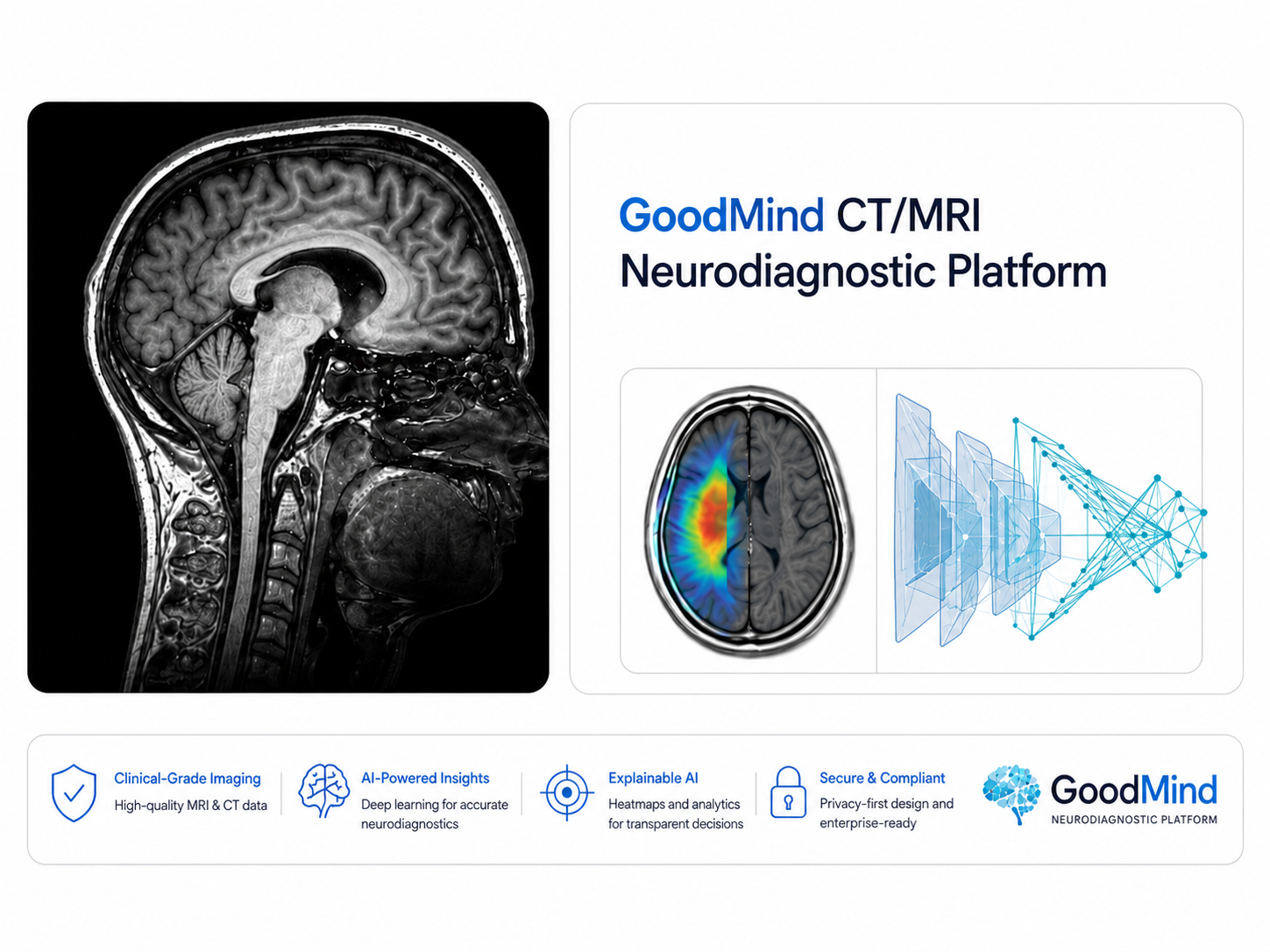
GoodMind CT/MRI Neurodiagnostic Platform
GoodFolio LTD · May 2025 – Present
- CNN and 3D vision models for stroke, dementia and brain tumour classification from CT/MRI scans.
- Grad-CAM heatmaps and confusion-matrix analysis for explainable diagnostic-support outputs.
PyTorchResNet50VGG16Grad-CAMDICOMU-Net
Medical Imaging
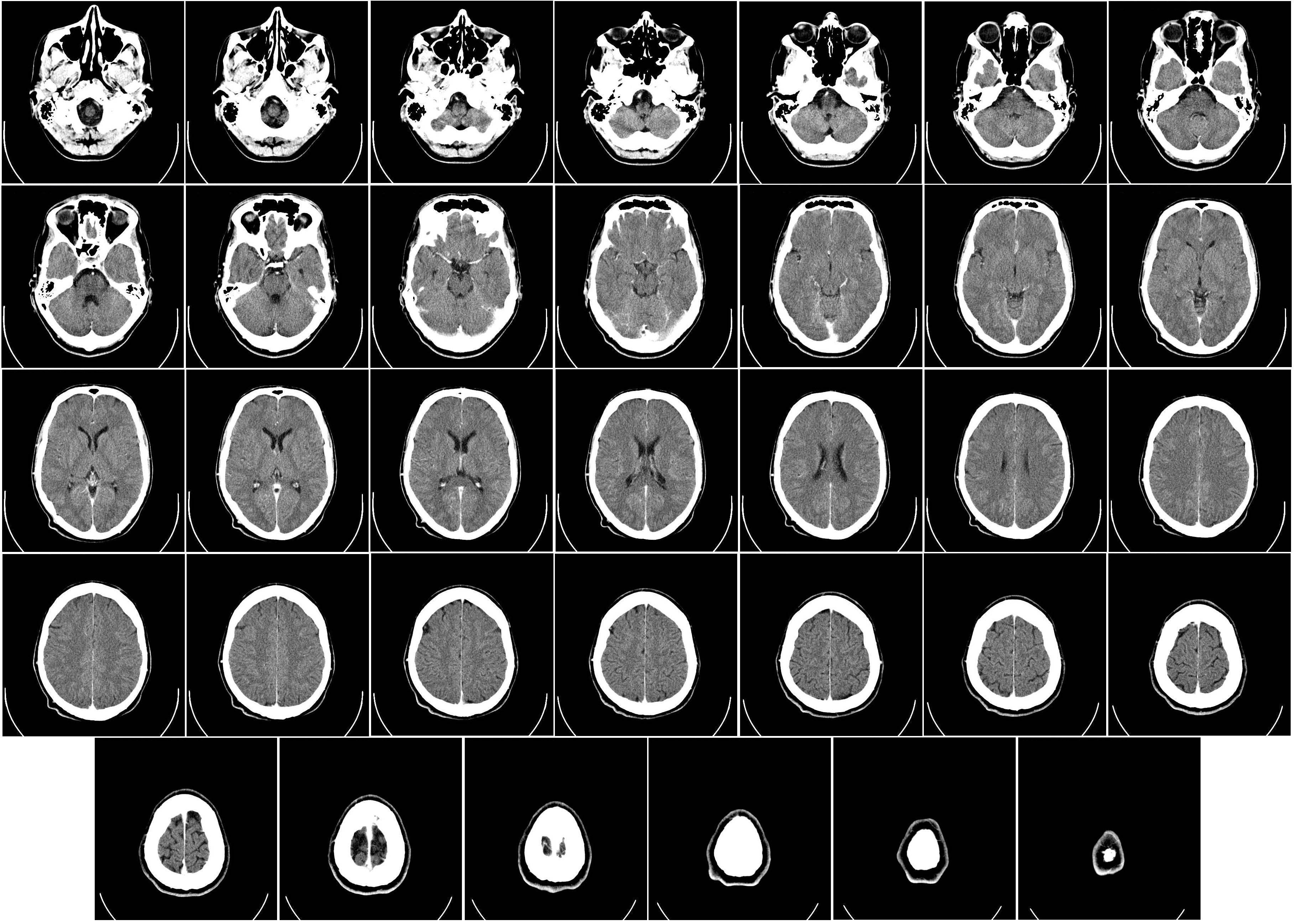
CT-Stroke Classification Workflow
GoodFolio LTD · 2025 – Present
Multi-class CT classification distinguishing normal scans, ischemic stroke and haemorrhagic/bleeding cases to support urgent neuroimaging triage — validated with cross-dataset testing.
CNNXceptionPythonDICOMTriage AI
Medical Imaging
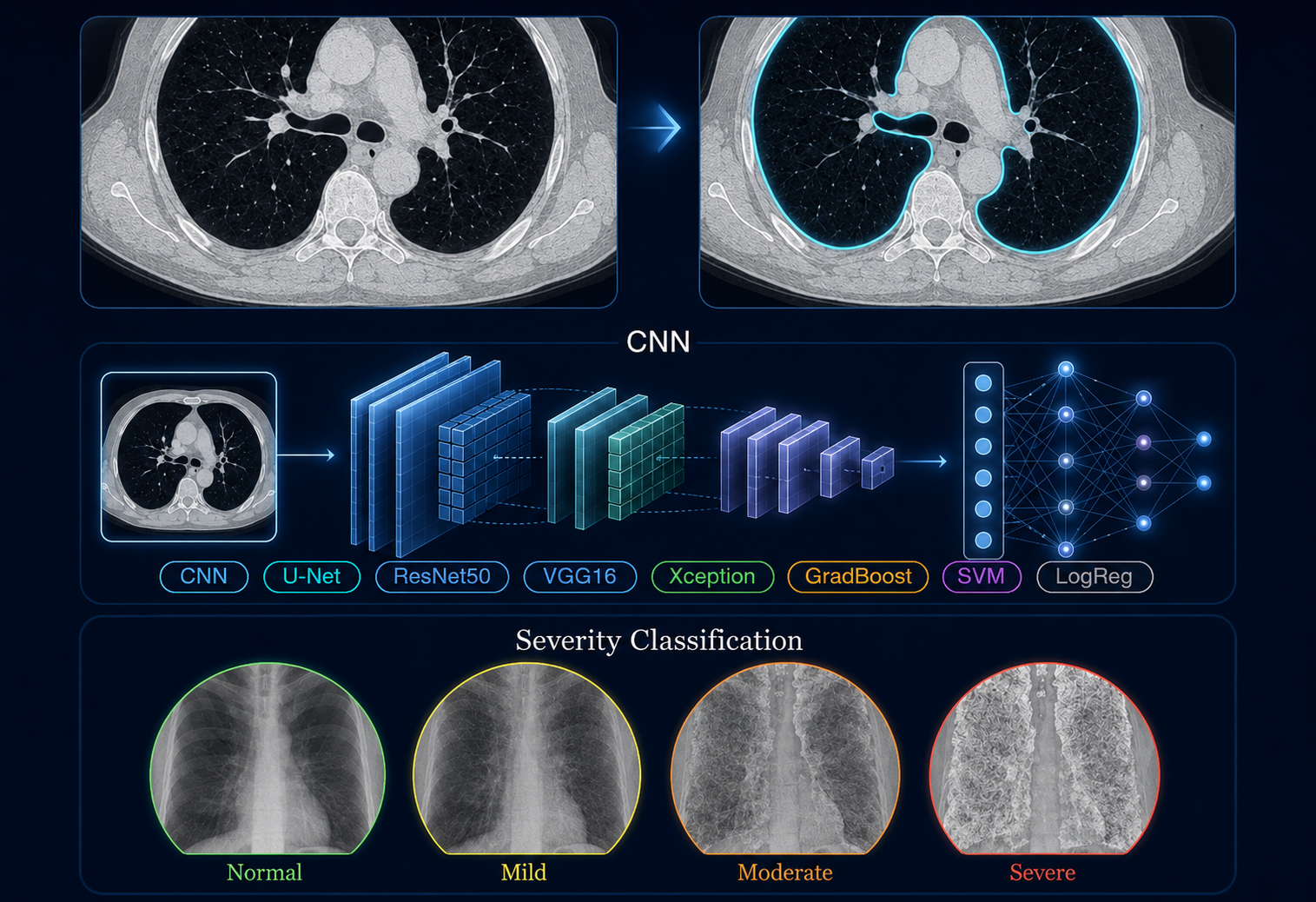
Lung CT Segmentation & Severity Classification
Published · Scientific Reports, May 2026
Hybrid deep learning framework on chest CT slices across four severity classes — Healthy, Mild, Moderate, Severe — with 5-fold cross-validation. Combined U-Net segmentation, CNN-based classification (VGG16, ResNet50, Xception), and classical ML (SVM, Gradient Boosting) with CLAHE preprocessing. Introduced a novel Brightness Intensity Range (BIR) method for pixel-level lung analysis, achieving high segmentation accuracy and fast hybrid-SVM inference compared to standalone CNNs.
View Publication
U-NetVGG16ResNet50CLAHESVMGradBoostBIR
Bioinformatics
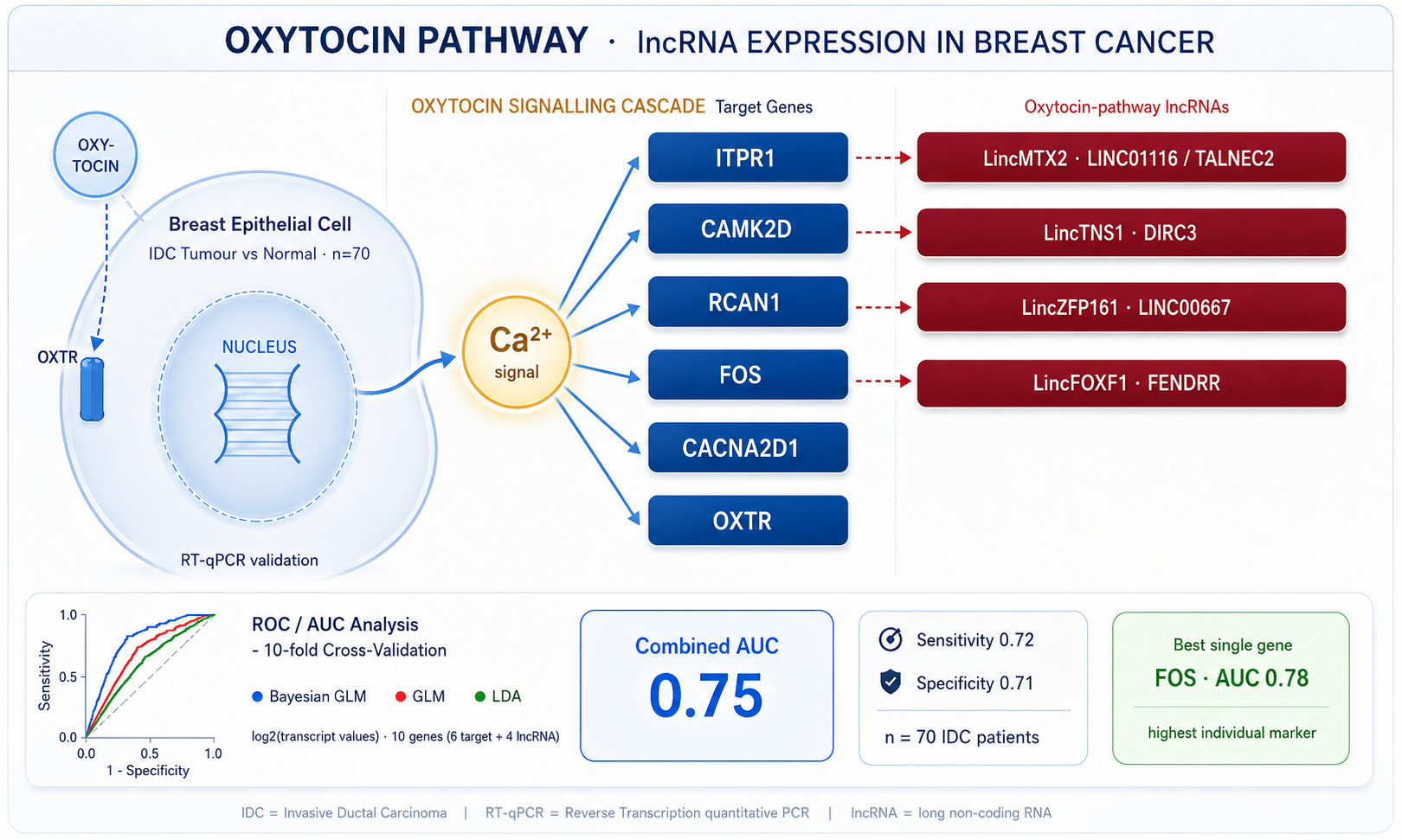
Oxytocin lncRNA — Breast Cancer Diagnostics
Published · Scientific Reports, Mar 2021 · 26+ citations
First study to profile oxytocin-pathway lncRNAs alongside target genes in an IDC breast cancer cohort, comparing expression in tumour versus matched normal tissue via RT-qPCR. Built and compared predictive models — Bayesian GLM, GLM, and LDA — evaluated through cross-validation, with the combined model achieving strong diagnostic performance. Led the ROC/AUC modelling workflow, produced all figures and tables, and contributed to peer-review revision.
View on GitHub
RROC/AUCBayesian GLMLDART-qPCR10-fold CV
Bioinformatics
RBP Disease Prediction Pipeline
Research Project · GitHub
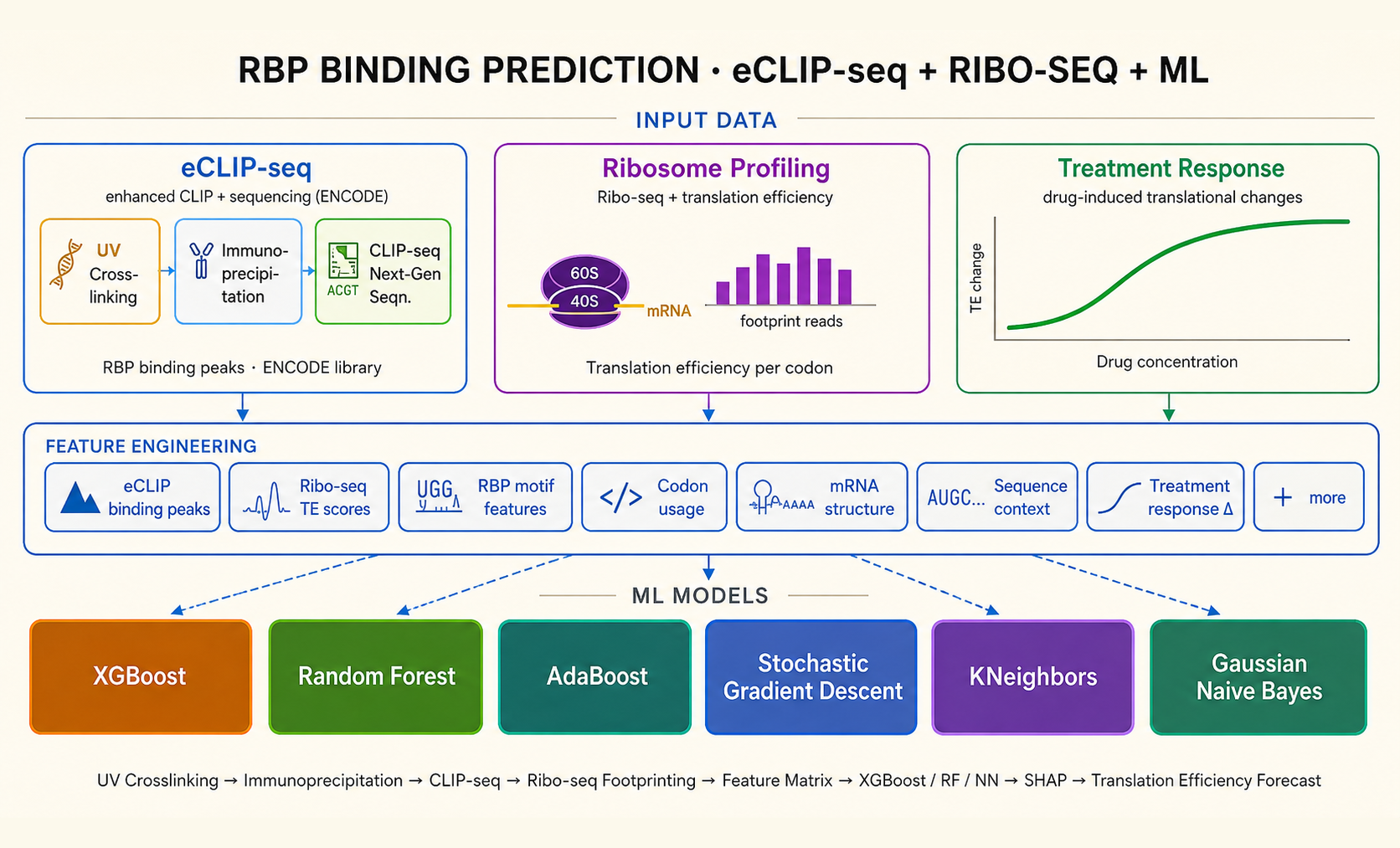
Predictive ML pipeline integrating ENCODE eCLIP binding signals from 139 RNA-Binding Proteins with Ribo-seq data to forecast treatment-driven translational changes in K562 leukaemia cells. Built and compared multiple classifiers across three iterative experiments — with hyperparameter optimisation via RandomizedSearchCV — and applied SHAP for biological interpretability of the best-performing model.
View on GitHub
PythonXGBoostAdaBoostRandom ForestKNNNaive BayesSGDSHAPRibo-seqENCODEeCLIP
AI Agents & FinTech
AI Agent Platform — Automated Outreach
GoodFolio LTD · 2025 – Present
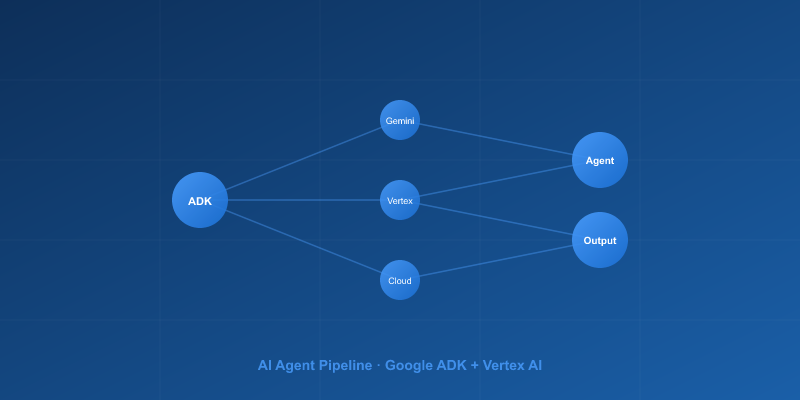
Developed and deployed AI agents for automated client outreach and RegTech inspection — Google ADK, Gemini, Vertex AI Agent Engine, Cloud Run. Explainable, auditable outputs for regulated environments.
Google ADKGeminiVertex AICloud Run

AI Agents & FinTech
AI-Powered Adaptive Engagement Framework
Published · Scientific Reports, Apr 2026
Research on enhancing banking customer experience through AI-powered invisible marketing — adaptive engagement strategies with measurable CX uplift in FinTech.
View Publication
AINLPFinTechAdaptive Systems